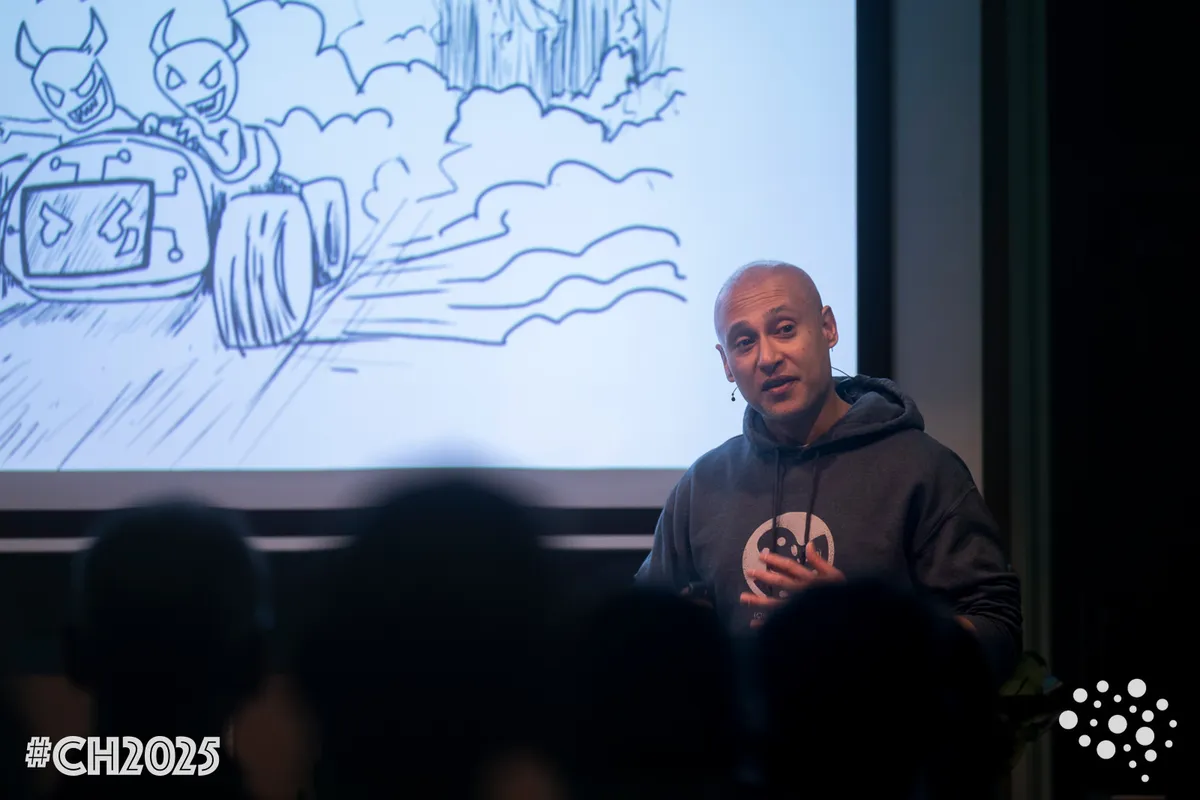
My talk at Experimentation Elite 2024 was about using AI to solve a specific process problem at a major company that I was consulting at. Seeing there was a disconnect between the experiment ideas and the user problems they were trying to solve.
Here’s an AI summary of the talk (don’t worry, I used a small energy efficient model):
Talk Summary: Fixing the “Empty Box” Problem
By Iqbal
Core Problem
Teams blame stats/tech for failed experiments, but the real issue is upstream failures:
- Poor problem definition
- Solution bias (jumping to answers)
- “Hemorrhaging relevance” (losing focus as ideas move from problem → execution)
Key Insights
-
Root Cause Chain
- Experiments fail because teams skip critical steps: problem framing → idea generation → design → execution.
- Solution bias is the core issue: Humans default to regurgitating old ideas (C-suite, LinkedIn swipes) or jumping to solutions too fast.
- Einstein’s rule: Spend 55 minutes on the problem, not solutions.
-
The Challenge
- PMs resist “more process,” even when they know frameworks (e.g., TOSCA).
- Time pressure is the real barrier—needed a scalable fix.
Solution: AI + Human Collaboration
- AI’s role: Accelerate divergent thinking (where humans excel but lack speed), and also ensuring relevance between stages of the process is maintained.
- Workshop structure (45 min):
- Root Cause ID
- Manual sticky notes → AI prompts to expand questions/insights (e.g., TOSCA framework tables).
- Result: Deeper exploration in minutes.
- Problem Statements
- AI generates drafts; PMs validate/iterate.
- Result: Less stress, higher quality.
- Ideation
- Manual brainstorm → AI prompts (e.g., “crazy ideas”) → diverse, high-quality ideas.
- Result: More ideas, reduced bias, level playing field for all PMs.
- Root Cause ID
Why It Worked
- AI as a “thinking partner”: Not a replacement, but a tool to unblock creativity and expose blind spots.
- Kolb’s learning cycle: Hands-on, reflective workshops made it practical.
- PMs in control: Validated AI outputs like a “boss”—no rigid processes.
Visual Update
- Old metaphor: “Empty box” (passive).
- New metaphor: PMs build the box (toolbox = active creation).